
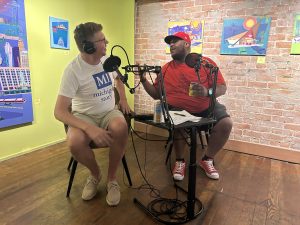
Thank you SO MUCH for your interest in submitting a story to MI Michigan Story! I genuinely believe every Michigander has a great Michigan story, it’s just a matter of finding the right one for this show!
On this page you’ll find tips on how to submit a story and information on what kind of stories we’re looking for
JUMP TO:
How to Submit
| What We’re Looking For
| How to Tell a Great Story
HOW TO SUBMIT A STORY
- Email us an audio file of you telling your story at story@mimichiganstory.com
- Just a quick-and-dirty audio recording on a smartphone (or whatever audio recorder you’ve got) of yourself telling the story. We don’t care about audio quality or the polish of your delivery–just communicate the nuts and bolts of what happened so we can see if it’s something that would work for us!
- Just a quick-and-dirty audio recording on a smartphone (or whatever audio recorder you’ve got) of yourself telling the story. We don’t care about audio quality or the polish of your delivery–just communicate the nuts and bolts of what happened so we can see if it’s something that would work for us!
- Message us that you’ve got a story that you’d like to share
- We can let you know about an open-mic event in your area where you can tell your story or, if we don’t have any in your area, we’d love to work with you to organize a open-mic near where you live!
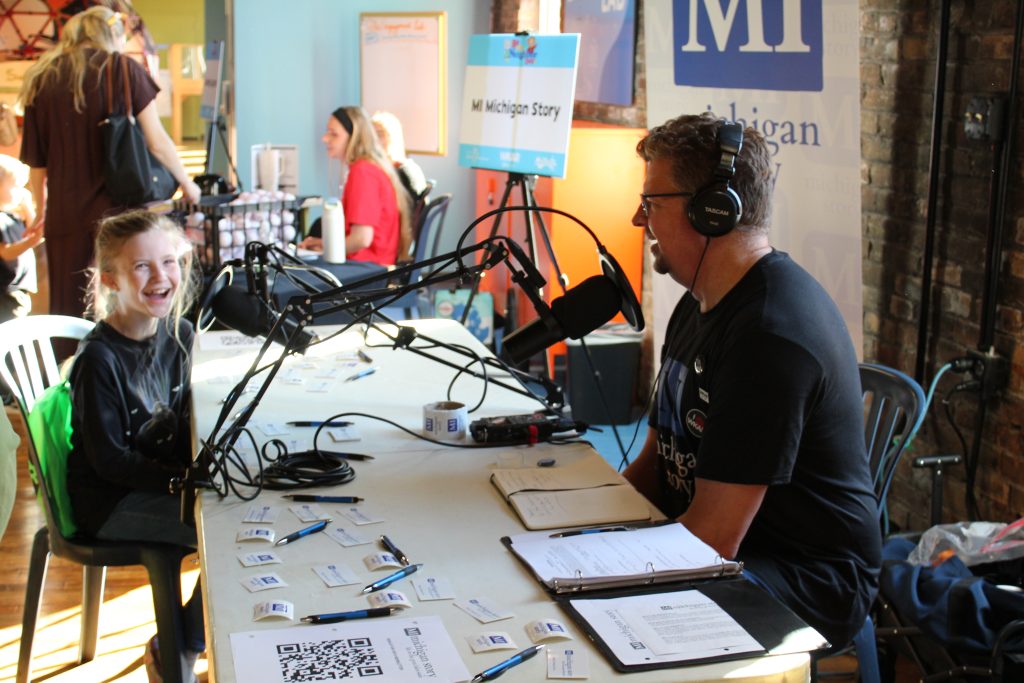
WHAT WE’RE LOOKING FOR
The most common question we get is: “What kind of stories are you looking for?” That can be a little tricky to qualify. Probably the best way to get a sense for the stories we like is to listen to our podcast.
Another way to think of it is that we’re looking for the types of stories we might share with family and friends around the dinner table.
Here are some ideas:
- Michigan-Based
If it didn’t happen in Michigan (or largely in Michigan), then it didn’t happen as far as we’re concerned! If a tree falls in the woods but those woods aren’t in Michigan, then we didn’t hear it. - First-Person
We prefer stories told by the people who experienced them. We will make exceptions for stories where the people who experienced them firsthand are no longer with us. - Authenticity
We love stories that have no agenda other than to share a part of your life with other people. We love stories about struggles, unexpected outcomes, or fiascos more than stories that might come across as having an agenda to make people feel better about us, promote a social/political cause, or promote our projects or brands. Our audience is looking for stories that share authentic glimpses of life in Michigan, not stories intended to promote causes, projects, or social change. - Length
We love stories of all lengths! That said, we’ve found that a 12-14 minute story is perfect for our show–but we mention that as a basic point of reference. We can use stories between about 30 seconds and 60 minutes. - Personal
We prefer stories that have a clear personal connection to the storyteller, as opposed to stories about general history. For example, we probably wouldn’t be interested in a story about how the Mackinaw Bridge was made, but we’d love a story about someone driving over the Mackinaw Bridge for the first time. - Distinct Moments in Time
We prefer stories that begin with “One day in July of 2014…” rather than “When I was a kid we used to…” Things we did all the time are common experiences and common experiences are not usually exciting. Once-in-a-lifetime experiences, on the other hand, are often much more intriguing. So if you used to do something all the time as a kid, think of a specific example of that that was particularly dramatic or unusual. We all walked up hill to school both ways through three feet of snow when we were kids, but this one day in January 1973 it snowed really bad…
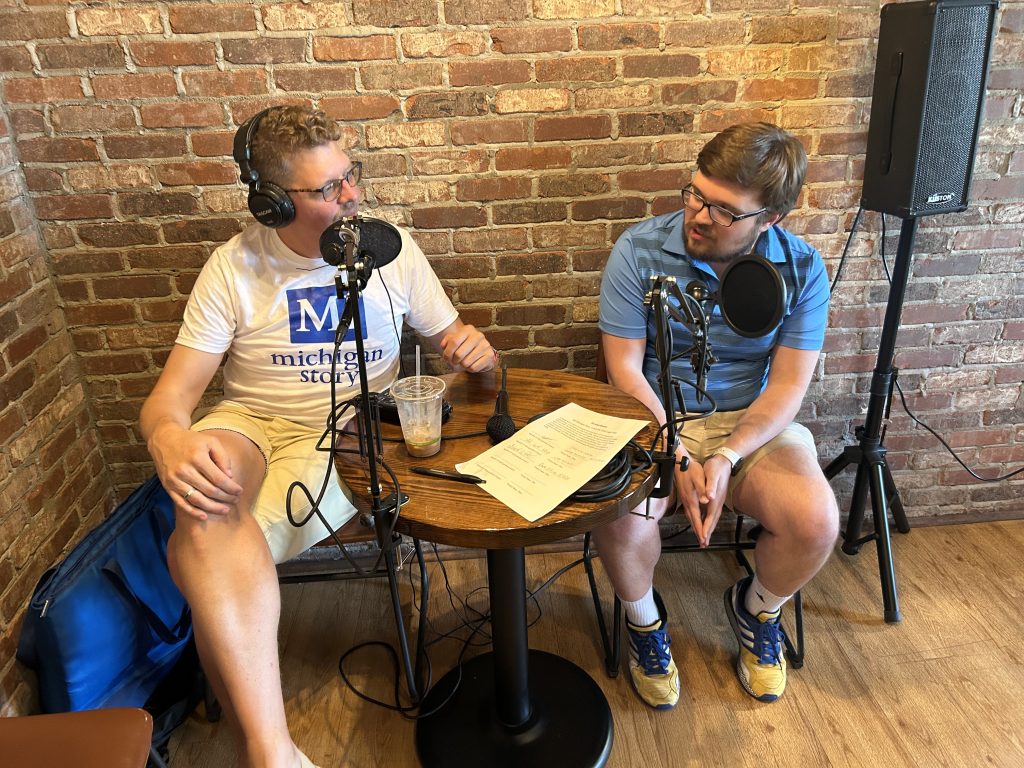
QUICK STORYTELLING TIPS
Storytelling is a long-analyzed pastime and you could dedicate lifetimes to studying it. But after many years of coaching storytellers, we have found a few key issues come up over and over again, so here are some quick tips for getting the best out of your story.
If you want to do a deeper dive into storytelling, MI Michigan Story creator/host Rob Prince has a free online storytelling course through the platform EdX.
Extemporaneous Delivery
You can image how weird and inauthentic it would feel to pull out a story you’d written about your day and read it to your family at the dinner table–just as it can sometimes feel disingenuous to see someone read a speech at an event rather than talk freely. That’s why we prefer storytellers deliver their stories at our events “off the cuff” rather than reading them. It can make the story feel more authentic.
The Black Box
The most common feedback we have for storytellers is, “What year did this happen in?” If your story is about when your car broke down on the freeway, it’s a much bigger problem in 1983 when no one had cellphones than it was in 2022 when you could phone a friend, call for a tow, and order UberEats without leaving your seat, for example.
When you are telling a story to an audience, it can be helpful to remember that they are entering the world of your story in a black box. They see, hear, feel, smell, touch nothing until you tell them about it.
When you say, “I was at home one day…” they don’t know if they are in Detroit or Marquette, if it’s 1972 or 2026, if it’s January or July, and many other potentially important details until you describe them. So remember to put yourself in the shoes of your audiences so you can describe the world in a way that helps them feel like they are there.
You don’t have to describe the paint on the walls if it’s not important to appreciate what is happening in your story, but you do need to give them some basics so they can feel like they are walking through this experience right next to you.
Finding the balance between too many details and not enough is tricky, but one tip is to consider whether including the detail is important for the audience to appreciate the story and move the plot along or not. For example, you don’t necessarily need to say, “My house was in a forest of aspen and oak and the emerald leaves were kissed by the morning sun.” You could just say, “My house was in the woods.” We know what woods look like.
The Story is in your Head
People connect to your story through the thoughts and emotions going on in your head while the story is unfolding, so make sure to include those in your story. A story without thoughts and emotions is basically a police report and few people read police reports for fun, but lots of people love true crime. What’s the difference? It’s the emotional connection.
Build to the Climax
The climax of your story is the payoff for the audience. That means everything in the story needs to be building and driving us toward that climax. Make sure your climax is clear and as powerful as possible. And once it’s over, wrap up and loose ends and get off stage! We say a story is fundamentally an intriguing question with an awesome answer. The question you create in the audience’s mind is basically “What happened?” and they get the answer at the climax.